
The Autism Subtype That Just Changed My Life
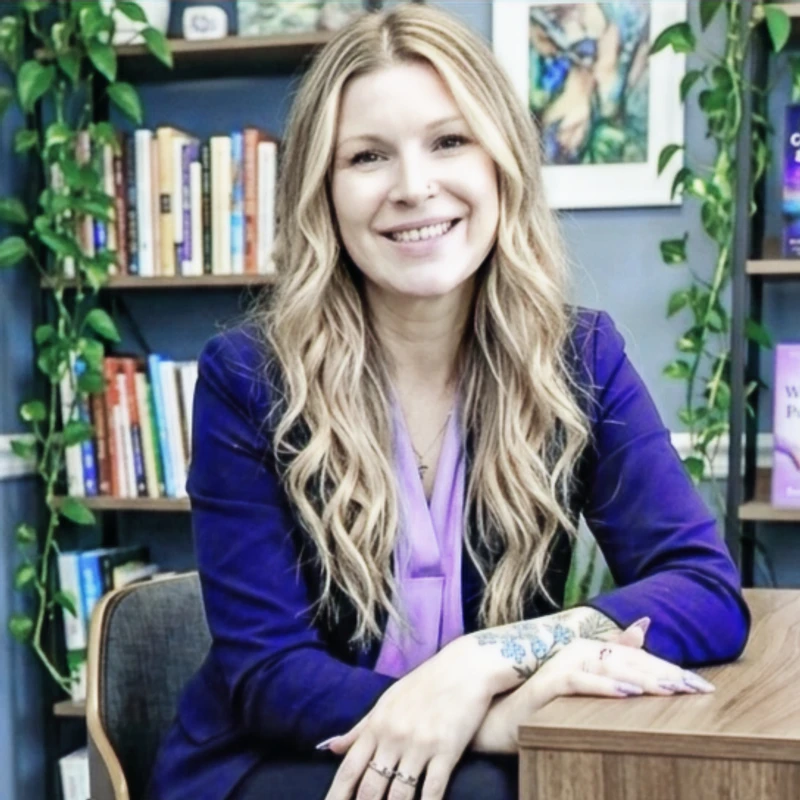
I always believed autism was something visible: it began with predictable early developmental delays, followed by social withdrawal, perhaps a child who didn't speak or avoided eye contact. It asked questions and left them unanswered. I didn't recognize it in the girl who won awards, smiled when needed, and maintained perfect attendance. I definitely didn't recognize it in myself.
But in July 2025, a groundbreaking study published in Nature Genetics identified four biologically distinct subtypes of autism. One of them: Type 1, which is most associated with Social & Behavioral Challenges (often without cognitive delays, and presented with comorbid mental health disorders such as anxiety, depression, ADHD, OCD) is now believed to be the most common. And it describes my life so precisely it feels like someone finally read my private journals.

This subtype includes people who hit all their developmental milestones on time. We walk, talk, and even excel. For girls, sometimes we show up in gifted and talented programs due to our extensive focus on masking. On the outside, we look fine. But inside, we are endlessly scanning the world for social cues, memorizing rules others seem to feel. We mask—often so successfully that our autism is missed for decades. This is especially common in women and nonbinary folks who are socialized early to please, to perform, and to disappear into expectations.
Reader Prompt: Were you ever praised for being "so mature," "so easy," or "so polite"—even while you were barely holding it together inside?
The study, conducted by researchers at Princeton and the Simons Foundation, analyzed data from over 5,000 children in the SPARK autism cohort. They looked at more than 230 behavioral, developmental, and psychiatric traits. Machine learning tools then sorted this massive data set into four clusters:
Social & Behavioral Challenges (~37%) – No developmental delays, but high rates of co-occurring psychiatric conditions like ADHD, anxiety, and OCD. Genes tend to express later in childhood, not prenatally.
Mixed ASD with Developmental Delay (~19%) – Significant early delays in speech and motor milestones, but fewer psychiatric overlays.
Moderate Challenges (~34%) – Core traits present but less severe, with typical milestone timing and relatively few co-morbidities.
Broadly Affected (~10%) – Marked developmental delays alongside extensive psychiatric and cognitive challenges, often tied to new (de novo) mutations.
Sources: Nature Genetics, 2025; Reuters Health; Princeton University News.
Reading about Subtype 1 was like unlocking a vault in my mind. Suddenly, the way I collapse after social events made sense. The way I rehearse phone calls. The need for control over food, clothing, and space. The internal storms of shame and sensory chaos that no one ever saw. The chronic academic underperformance. The challenges with work "friends," or I guess I should say work acquaintances. The intense focus on perfumes and lights and foods and textures.
Reader Prompt: Can you think of a time you felt deeply overwhelmed but had to pretend everything was okay? What did that cost you?
I remember a church performance in third grade. I sang a short choir solo on stage. I smiled when I was supposed to, bowed correctly. Adults told me I was brave. But I can still feel the lights in my eyes, the sound of the audience clapping in the wrong rhythm, the itchy seam of my dress against my spine. The way the song just sat in my throat and never actually came out when I replayed it in my head. I went home and screamed into my pillow for an hour. I didn't have the words to explain that it wasn’t nerves—it was pain.
I also think of the years I went to staff meetings with a smiling face and organized binder or electronic device with prepared questions to demonstrate engagement, all the while fighting full-body shutdowns inside. Or how every holiday with extended family meant masking through noise, small talk, unspoken expectations—only to spend the next three to five business days sobbing in my car because no one noticed I wasn’t okay.
This is the price of being Subtype 1: you're "not autistic enough" to get help, but your nervous system is screaming. Your emotional landscape is raw and wild. Your mask is award-winning. And eventually, something cracks. It might be at work, or at home in a relationship where you finally feel that cushion of support. You feel seen. That's a whole seperate topic, the sensation of feeling seen...
Reader Prompt: If you relate to this, where do you feel the mask in your body? What would it feel like to take it off, even for a moment?
This research matters because it validates what so many of us have known in our bones, even if we have not yet been about to obtain a formal diagnosis. That autism doesn’t always look like the stereotypes or diagnoses or cookie-cutter accomodations. It validates that many of us are deeply autistic—but invisible.
It matters because it can change what interventions we pursue. Instead of focusing on teaching us to socialize "better," we can focus on nervous system support. Sensory accommodations. Emotional regulation. Recovery from years of masking.
And it matters because we deserve to know the truth. We deserve to find each other.
Final Question: If you could be fully seen—without masking, without performing—would you? And who might you become?
This piece is adapted from my upcoming book, From Masking to Meaning: My Path to Authenticity. To learn more about the subtypes of autism, check out the research published in Nature Genetics (2025) and analysis by the Simons Foundation Autism Research Initiative.


Comments